
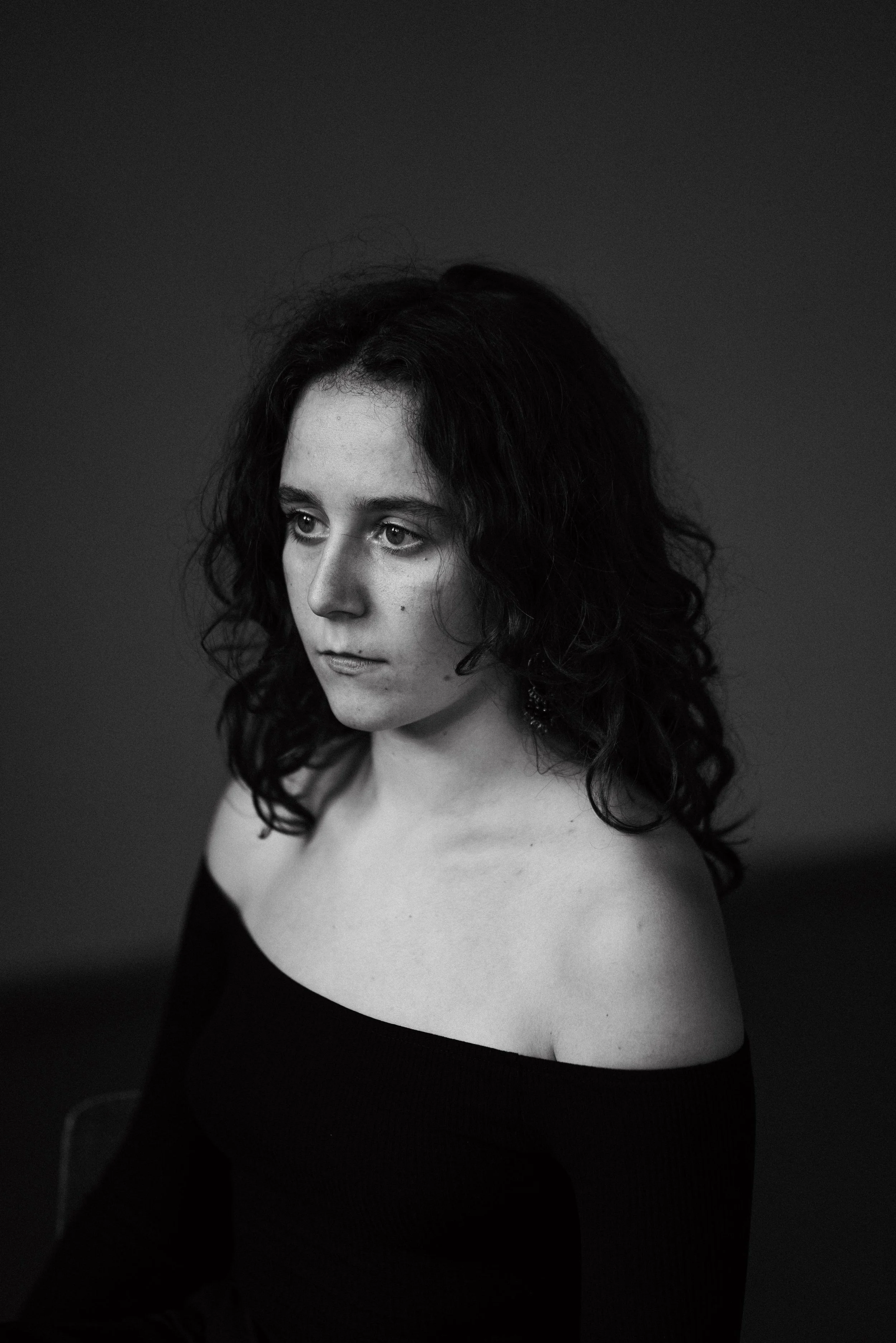
Teuntje Wolters
(nl)
Teuntje Wolters is regisseur en schrijfster. Momenteel studeert ze af aan de regieopleiding van Toneelacademie Maastricht. In haar werk gaat ze voor het grote en monumentale beeld. Haar voorstellingen bieden een nieuw perspectief op genderidentiteit en onderzoeken de menselijke geest.
In 2025 won ze de Best Actress Award op het Voghera Film Festival voor de rol van Eva in de korte film Rounds. Afgelopen jaar liep ze stage als regieassistent van Lisaboa Houbrechts bij Toneelhuis en KVS met de voorstelling Siddhartha.
Een transvrouw ondergaat haar genderbevestigende operatie, gedurende haar hersteltijd in het ziekenhuis begint ze zich af te vragen; wat is vrouwelijkheid en hoever zijn we bereid om daarvoor te gaan? Waar in deze dwingende wereld vinden transpersonen de ruimte om hun eigen antwoorden op deze vragen te formuleren?
In haar week van herstel begeven we ons als publiek continu tussen slapen en ontwaken, droom en nachtmerrie. In de gesprekken met de mensen om haar heen reflecteert ze op haar transitie en vraagt ze zich af hoeveel autonomie ze nu eigenlijk over haar lichaam heeft gehad.
(en)
Teuntje Wolters is a director and writer. She is currently completing her studies in the directing program at the Maastricht Academy of Dramatic Arts (Toneelacademie Maastricht). Her work is characterized by a grand, monumental aesthetic. Her productions offer a fresh perspective on gender identity and explore the human psyche.
In 2025, she won the Best Actress Award at the Voghera Film Festival for her role as Eva in the short film *Rounds*. Last year, she completed an internship as an assistant director to Lisaboa Houbrechts at Toneelhuis and KVS for the production *Siddhartha*.
A trans woman undergoes gender-affirming surgery; during her recovery in the hospital, she begins to wonder: what is femininity, and how far are we willing to go to achieve it? In a world that imposes such rigid expectations, where can trans people find the space to formulate their own answers to these questions?
Throughout her week of recovery, the audience is immersed in a state between sleep and wakefulness—somewhere between a dream and a nightmare. Through conversations with those around her, she reflects on her transition and questions how much autonomy she has truly had over her own body.